Electric car batteries:
Lifespan, warranty & care tips
How long do EV batteries last, and how can you keep them in good condition? Here’s what you need to know about battery health, charging habits, and buying or selling a used electric car.
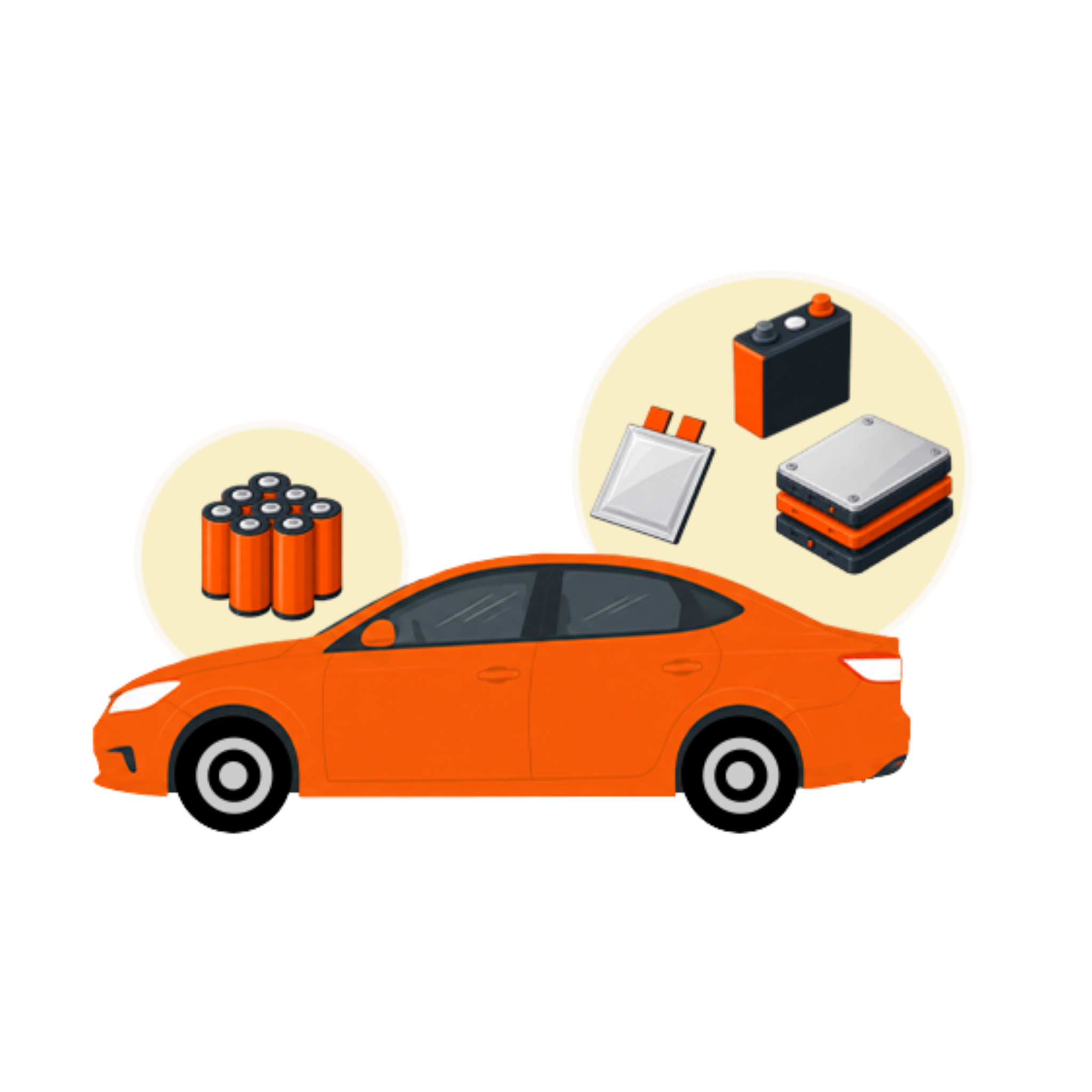
How long does an electric car battery actually last?
The battery is one of the most important and expensive components of an electric car. That’s why battery health is a major concern when buying a used EV. How much of the original capacity remains? Has the driving range decreased over time? And could an expensive battery replacement be necessary in the future?
While these concerns are understandable, the actual risks are often lower than you might think. Modern EV batteries are designed to last much longer than the batteries in smartphones or laptops. Advanced battery management systems continuously monitor factors such as temperature, charge level, and cell voltage, helping to protect the battery from excessive stress and potentially damaging conditions.
However, all batteries age over time. Every EV battery gradually loses some of its usable capacity, a natural process known as battery degradation. The key question isn’t whether a battery will degrade, but how quickly and how much capacity it will lose.
Why do EV batteries lose capacity?
EV batteries age in two main ways. The first is cycle aging, which happens as the battery is charged and discharged. Each charging cycle causes a small amount of wear on the battery cells. Frequent fast charging, deep discharging, and regularly charging to 100% can accelerate this process.
The second type is calendar aging, which occurs even when an electric car isn’t being driven. Battery age, temperature, and charge level during long periods of inactivity all play a role. For example, leaving an EV parked in extreme heat with a fully charged battery for several weeks can accelerate degradation compared to a car that’s driven regularly and kept at a moderate charge level.
Both types of aging gradually reduce the battery’s capacity, meaning the car can travel fewer miles on a full charge. Significant battery degradation can also lower the vehicle’s resale value, making battery health an important factor when buying or selling a used electric car.
Battery State of Health (SoH): What does it mean?
Battery health is commonly measured using the State of Health (SoH). Expressed as a percentage, it shows how much of the battery’s original capacity remains.
For example, a battery with a SoH of 90% can still store approximately 90% of its original capacity. If an electric car had a real-world range of 400 kilometres when new, its estimated range would now be around 360 kilometres under similar conditions. However, actual range also depends on factors such as temperature, driving habits, speed, tyres, and the use of heating or air conditioning.
As a general guideline, a SoH of 90–100% indicates excellent battery health, while 80–89% is usually considered good for an older EV. Between 70% and 79%, the loss of capacity becomes more noticeable and should be reflected in the vehicle’s resale value. If the SoH drops below 70%, it’s worth taking a closer look at the battery’s condition and warranty coverage.
However, these figures are only a rough guide. Battery health also depends on factors such as the vehicle’s age, mileage, model, and how the SoH was measured. For example, a SoH of 82% might be perfectly reasonable for a nine-year-old EV but could be a warning sign in a car that’s only two years old.
How much is your electric car still worth?
Calculate your car's value for free now and sell it stress-free!
How much battery capacity do electric cars lose each year?
Modern EV batteries tend to last much longer than many people expect. A large-scale study by TÜV Nord and Carly analysed around 50,000 vehicle records and found that batteries from many manufacturers lose an average of just 1% of their capacity per year.
Hyundai, Kia, Mercedes, Smart, BMW, and Mini were among the brands that performed particularly well in the study. Nine-year-old Hyundai and Kia vehicles retained an average of around 93% of their original battery capacity, while BMW models from 2015 still had more than 80% remaining on average.
Even brands with higher battery degradation rates often had older vehicles that still met or exceeded typical warranty thresholds. This suggests that EV batteries can remain usable for much longer than many people expect.
However, these results shouldn’t be seen as a definitive ranking of EV manufacturers. The models, production years, and amount of data analysed vary significantly between brands. Battery technology and temperature management have also improved considerably over the years. That’s why, when buying a used electric car, the condition of the individual battery matters more than the manufacturer’s overall average.
EV battery warranty in Switzerland: What you need to know
Most EV manufacturers in Switzerland offer a battery warranty of around eight years or 160,000 kilometres, whichever comes first. Many also guarantee that the battery will retain at least 70% of its original capacity. If it drops below this level during the warranty period, you may be eligible for a repair or replacement, depending on the manufacturer’s warranty terms.
It’s important to understand the difference between normal battery degradation and a technical fault. Losing some battery capacity over time is completely normal and doesn’t necessarily mean something is wrong. Battery warranties generally cover cases where capacity drops below the manufacturer’s specified minimum or where a technical fault occurs.
When buying a used electric car in Switzerland, the battery warranty doesn’t start again. What matters is when the car was first registered and how many kilometres it has covered. It’s also important to check whether the warranty transfers to the new owner and whether any servicing requirements or other conditions apply. For imported vehicles, reviewing the warranty documents is particularly important.
A battery problem doesn’t always mean the entire battery needs replacing. Many EV batteries have a modular design, meaning individual modules, cooling system components, or electronic controls can sometimes be repaired or replaced separately. However, this type of work requires a specialist workshop with qualified technicians trained to handle high-voltage systems.
How to extend your EV battery's life: Charging tips
Your charging and driving habits can make a big difference to your EV battery’s lifespan. For everyday use, it’s generally best to keep the charge level between 20% and 80%. Frequently charging to 100% or letting the battery run almost empty can put extra stress on the battery cells and accelerate degradation over time.
Charging your EV to 100% before a long journey is perfectly fine. Just try to set off soon after charging, rather than leaving the car parked with a full battery for an extended period.
On longer trips, charging to 100% at a rapid charging station often isn’t worth the extra time. Many EVs charge significantly more slowly once the battery reaches around 80%. As a result, making an extra short charging stop can actually be quicker than waiting for a full charge in one go.
DC fast charging is convenient and especially useful on longer journeys. However, if you can charge your EV at home or at work, it’s generally better to use slower AC charging for everyday use. AC charging typically generates less heat and puts less stress on the battery, helping to preserve its long-term health.
Temperature also plays an important role in battery health. EV batteries perform best within a moderate temperature range, so parking in the shade or a garage during hot weather can help protect them.
In winter, preconditioning the battery before fast charging can make a big difference. Many modern EVs do this automatically when you select a fast-charging station in the navigation system. This brings the battery to a more suitable temperature, allowing it to charge faster and more efficiently while reducing unnecessary stress.
If you’re not using your EV for several weeks, avoid leaving the battery fully charged or almost empty. A charge level of around 30–70% is generally ideal for longer periods of storage. However, always check your manufacturer’s recommendations, as these may vary depending on the battery type.
Your driving habits can also affect your EV battery’s lifespan. Frequent hard acceleration and sustained high speeds put extra strain on the battery and generate more heat. Driving smoothly and anticipating traffic not only reduces energy consumption but also helps protect your battery over time.
LFP vs. NMC batteries: Key differences and lifespan
Most modern electric cars use either NMC or LFP batteries. Both are types of lithium-ion batteries, but they differ in their chemical composition and performance characteristics.
NMC stands for nickel, manganese, and cobalt. These batteries have a high energy density, meaning they can store more energy without adding too much weight. This makes them a popular choice for electric cars with longer driving ranges. NMC batteries can also support high charging speeds, depending on the vehicle. However, they tend to be more expensive to produce, and some of the raw materials used raise environmental concerns.
LFP batteries use lithium iron phosphate and contain no cobalt. They’re known for their durability, long lifespan, and thermal stability. They’re also generally cheaper to produce. However, their lower energy density means they need more space and weight to store the same amount of energy. In cold weather, charging speeds can also drop significantly, especially in vehicles without effective battery temperature management.
The best battery type depends on the vehicle and your driving needs. LFP batteries are often a great choice for affordable, everyday electric cars. If you prioritise maximum driving range and fast charging, you’re more likely to find what you’re looking for in an EV with an NMC battery.
Charging recommendations can vary depending on the battery type. While many NMC batteries are best kept at around 80% for everyday use, some manufacturers recommend regularly charging LFP batteries to 100%. This helps the battery management system accurately estimate the remaining charge. Always follow the charging guidelines provided by your vehicle’s manufacturer.
Buying a used electric car: How to check battery health
When buying a used electric car in Switzerland, mileage alone doesn’t tell the whole story. The vehicle’s age, mileage, battery health, remaining warranty, and service history all play an important role in assessing its overall condition.
An up-to-date, independent battery test is one of the best ways to assess a used EV’s battery health. In Switzerland, the Touring Club Switzerland (TCS) offers specialised EV battery tests that measure the battery’s State of Health (SoH). A battery health certificate gives both buyers and sellers a clearer picture of the remaining battery capacity.
The car’s estimated driving range alone isn’t a reliable indicator, as it can vary depending on previous driving habits, outside temperatures, and energy consumption.
It’s also important to check the battery warranty, the vehicle’s first registration date, and any remaining mileage coverage. A complete service history, up-to-date software, and an undamaged battery housing are all good signs.
If there’s visible damage underneath the car or evidence of a significant impact, it’s worth having the vehicle inspected by a specialist. A battery health test is useful, but it doesn’t replace a thorough pre-purchase inspection.
Ultimately, what matters most is whether the car’s remaining range meets your everyday needs. Even an EV with a SoH of 80% can be a great choice if it offers enough range for your daily journeys, with some to spare. However, the reduced battery capacity should be reflected in the asking price.
Selling an electric car: How battery health affects its value
When selling a used electric car in Switzerland, battery health is becoming an increasingly important selling point. Even two cars of the same model, age, and mileage can have very different resale values depending on how much their batteries have degraded over time.
A good State of Health (SoH), remaining manufacturer warranty, and a clear service history can give potential buyers greater confidence in your EV. Without proof of battery health, buyers may be more hesitant or try to negotiate a lower price. An independent battery test, such as one offered by the TCS, can help demonstrate the battery’s condition and support a fair, realistic asking price.
Looking to sell your electric car for the best possible price? Autobuster takes the hassle out of selling your EV. We provide a realistic car valuation and handle the entire sales process, from professional vehicle listings and viewings to test drives and negotiations with potential buyers. It’s a simple, safe, and hassle-free way to sell your used electric car in Switzerland.
Conclusion: How long do EV batteries really last?
EV batteries naturally degrade over time, but research shows they’re generally built to last. Modern battery management systems help protect the cells, while long manufacturer warranties provide additional peace of mind. Ultimately, it’s not just the car’s brand that matters, but the actual health of its battery.
If you’re buying or selling a used electric car, it’s worth checking the battery’s State of Health (SoH), remaining warranty, and service history. Knowing the battery’s condition helps you better understand its remaining range and assess the vehicle’s resale value more accurately.
Selling your electric car? Find out how battery health affects its value
Autobuster helps you find a realistic market value for your electric car, assesses the vehicle and battery condition, and takes care of the entire sales process. From professional vehicle listings and presentation to negotiating with potential buyers, we handle everything so you can sell your EV with confidence and without the hassle.
Sources
Aampere: Battery Risk – Everything You Need to Know About Warranties on Used Electric Cars (Retrieved August 24, 2026).
https://www.aampere.com/blog/ratgeber-risiko-akku—alles-was-du-uber-die-garantie-bei-gebrauchten-e-autos-wissen-musst
ADAC: How to Charge an Electric Car Battery Properly and Drive Gently (Retrieved August 24, 2026).
https://www.adac.de/rund-ums-fahrzeug/elektromobilitaet/laden/elektroauto-akku-schonen/
AUTO BILD: TÜV Study: These Electric Car Manufacturers Have the Best Batteries (Retrieved August 24, 2026).
https://www.autobild.de/artikel/tuev-analysiert-gebrauchte-elektroauto-akkus-28575969.html
TÜV NORD: Caring for Your Electric Car Battery: 7 Tips for a Longer Service Life (accessed August 24, 2026).
https://www.tuev-nord.de/de/wissen/ratgeber-und-tipps-mobilitaet/elektroauto-batterie/
Electric Car Guide: Electric Car Batteries (accessed August 24, 2026).
https://ratgeber-elektroautos.de/elektroauto-akkus.php
ADAC: Electric Car Batteries: Lifespan, Warranty, and Repairs (accessed August 24, 2026).
https://www.adac.de/rund-ums-fahrzeug/elektromobilitaet/laden/elektroauto-batterie/
AUTO BILD: Electric Car Batteries: These 11 Tips Will Help Your Electric Car Battery Last Longer (Accessed August 24, 2026).
https://www.autobild.de/artikel/e-auto-batterie-akku-tipps-langes-leben-28473257.html
Enpal: Electric Car Batteries: Structure, Performance, and Lifespan Explained Simply (Retrieved August 24, 2026).
https://www.enpal.de/elektroauto/batterie