
Electric Mobility in Switzerland: What You Need to Know
Battery, range and charging: What you need to consider before buying a used electric car.
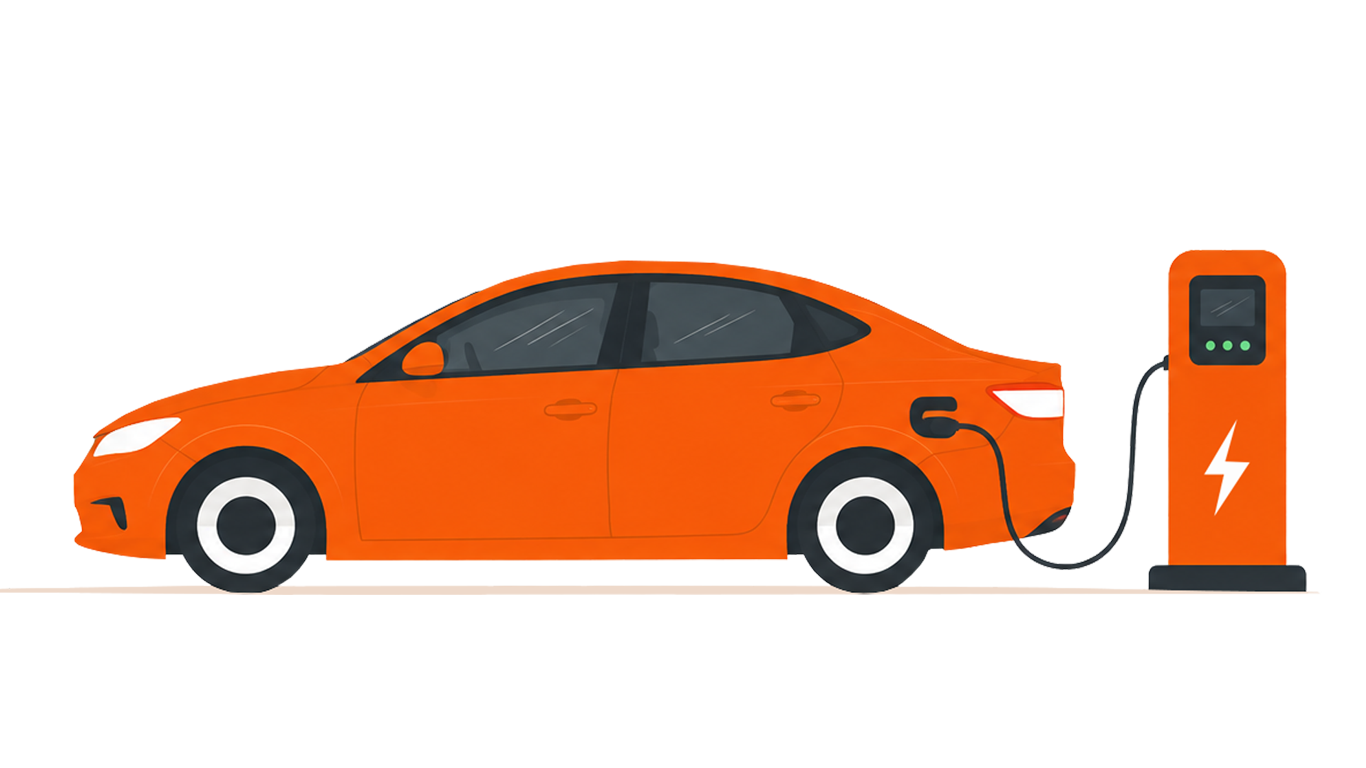
Buying a Used Electric Car: Is It Right for You?
Electric cars are now firmly established on the used car market. The choice is growing, and used models are often considerably more affordable than comparable new cars. However, buying an electric car involves different considerations than buying a petrol or diesel vehicle: What condition is the battery in? Is the range sufficient for your daily needs? And how quickly can the car be charged?
We’ll show you how to determine whether an electric car suits your mobility needs and what to look out for when buying a used model.
Does an Electric Car Suit Your Lifestyle?
Before comparing individual models, take a closer look at your driving habits. The key question is not which electric car has the largest battery, but how much range you actually need and which charging options work best for you.
Ask yourself the following questions:
Can I charge the car at home or at work?
How often do I drive long distances?
How long do I usually drive without taking a break?
Do I need plenty of space or towing capacity?
If you mainly have a short commute and use your car for everyday journeys, you are unlikely to need the maximum possible range. SwissEnergy uses a 20-kilometre commute each way as an example. Depending on the vehicle, a single charge per week may be enough for five working days.
An electric car is particularly convenient if you can charge it at home or at work. Charging at your own wallbox is generally more affordable than regularly using public fast-charging stations. If you do not have access to a private charging point, check which charging stations are available in your area and compare their prices before buying.
An electric car can also be a practical choice for long journeys. However, if you regularly travel longer distances, you should consider both the vehicle’s range and its charging speed.
What Condition Is the Battery In?
The high-voltage battery is the most important and expensive component of an electric car. It is therefore understandable that many buyers worry about how much it may have deteriorated in a used vehicle.
Lithium-ion batteries gradually lose some of their capacity through age and use. However, an older battery does not automatically need to be replaced. Modern electric cars are equipped with a battery management system that monitors factors such as temperature and voltage, helping to protect the battery from potentially damaging operating conditions.
The battery’s current condition is expressed as its State of Health, or SOH. Put simply, an SOH of 90% means that the battery retains approximately 90% of its original usable capacity.
Many manufacturers provide an eight-year or 160,000-kilometre warranty for the high-voltage battery, often guaranteeing that it will retain at least 70% of its original capacity. However, the exact terms vary between manufacturers and models, so the warranty conditions should always be checked carefully.
When buying a used electric car, you should ideally have the battery’s condition verified through an independent test or battery certificate. The vehicle’s range display alone is not a reliable indicator, as it is influenced by factors such as previous driving habits and current energy consumption. Inspection reports, a complete service history and details of any remaining warranty coverage can also provide valuable information.
A fault does not necessarily mean that the entire battery needs to be replaced. Depending on its design and the extent of the damage, individual modules or components may be repaired or replaced.
Assessing Range and Charging Speed Realistically
The manufacturer’s WLTP range provides a useful basis for comparing different vehicles. However, it does not necessarily reflect the range you can expect under everyday driving conditions.
An electric car’s real-world range depends on several factors, including:
Vehicle energy consumption
Speed and driving style
Outside temperature and battery temperature
Heating and air conditioning
Vehicle load and terrain
Tyres and road conditions
Real-world range can be significantly lower than the official figure, particularly when driving on motorways or in cold weather. According to SwissEnergy, electric cars use around 10% to 30% more energy in winter than during the warmer months. In sub-zero temperatures and on short journeys, the increase can be even greater.
When choosing a vehicle, do not focus solely on its maximum range. Consider how far it should still be able to travel reliably in winter and after several years of battery use.
AC or DC: How Quickly Can the Car Charge?
There are two main types of electric-car charging: AC and DC.
AC charging usually takes place at home, at work or at a standard public charging station. Many electric cars can charge at 11 kW using a wallbox, adding approximately 50 kilometres of range per hour, depending on the vehicle’s energy consumption.
DC charging is mainly available at fast-charging stations. It supplies direct current straight to the battery and is particularly useful if you regularly travel longer distances.
However, the manufacturer’s maximum charging speed does not tell the whole story. How long the vehicle can sustain that speed is equally important. The average charging speed and the time required to charge the battery from 10% to 80% therefore provide a more realistic basis for comparison.
Before buying, make sure you compare the following:
• Maximum DC charging speed
• Charging time from 10% to 80%
• Available charging ports
• Charging cables included with the vehicle
• Battery preconditioning capability
A vehicle with a long range but slow DC charging can be less practical on long journeys than a more efficient model with a smaller battery and faster charging.
What Should You Check When Buying a Used Electric Car?
The usual checks involved in buying any used car also apply to electric vehicles. The bodywork, suspension, tyres, brakes, interior, electronics and service history should all be inspected carefully.
When buying a used electric car, you should also have the following points checked:
Battery and High-Voltage System
In addition to checking the battery’s State of Health, the battery casing and underbody should be inspected for visible damage. This is particularly important if the vehicle has been involved in an accident or suffered a significant impact to its underbody.
You should also ask about any previous battery damage, repairs, recalls and software updates. Wherever possible, this information should be provided in writing.
Charging System and Accessories
Check that the vehicle charges correctly at both an AC charging station and, if supported, a DC fast-charging station. You should also inspect the condition of the charging cables and make sure that all accessories listed in the advert are included.
Tyres and Brakes
Due to the weight of their batteries, electric cars are often heavier than comparable petrol or diesel vehicles. Their high torque can also contribute to increased tyre wear.
The braking system also requires careful inspection. Regenerative braking means that the mechanical brakes are sometimes used less frequently. Although this reduces wear, limited use can also lead to corrosion or components becoming stiff.
Service History and Warranty
Although electric cars generally require less maintenance, they still need regular inspections. A complete service history is particularly important if the battery or other electrical components are still under warranty. Missing maintenance or outstanding service campaigns could make it more difficult to claim under the warranty later.
A professional pre-purchase inspection reduces the risk of hidden defects being overlooked. An inspection specifically designed for used electric cars covers not only the electrical systems, but also the suspension, brakes, wheels, onboard electronics and other vehicle components.
Conclusion: Look Beyond Maximum Range
A used battery is no reason to rule out a used electric car. What matters is whether the vehicle suits your everyday needs and whether its condition has been clearly documented.
Before buying, pay particular attention to:
• The battery’s State of Health and remaining warranty coverage
• The vehicle’s real-world range in summer and winter
• Its AC and DC charging speeds
• Its overall condition and service history
This will help you assess whether the vehicle’s price, range, charging speed and battery condition offer the right overall package.
Sell Your Electric Car Without the Hassle
Looking to sell your electric car? Autobuster handles the entire marketing process for you – from preparing the vehicle and taking professional photos to creating the listings, responding to enquiries, negotiating with buyers and arranging test drives.
You relax – we negotiate!
With Autobuster, you benefit from:
A realistic market price assessment;
A technical inspection through our partners;
Professionally created listings;
Communication with prospective buyers;
Price negotiations with buyers;
Preparation of the sales contract and secure payment processing.
You do not have to deal with price negotiations, unreliable enquiries or finding the right market position for your vehicle. We handle the entire sales process for you, and you only pay our service fee if your car is successfully sold.
Sources
ADAC: Electric Car Tests (2026): Here’s What the Range and Energy Consumption Really Are (Accessed: July 25, 2026)
https://www.adac.de/rund-ums-fahrzeug/elektromobilitaet/elektroauto/stromverbrauch-elektroautos-adac-test/
ADAC: Electric Car Batteries: Lifespan, Warranty, Repairs (Accessed July 25, 2026)
https://www.adac.de/rund-ums-fahrzeug/elektromobilitaet/laden/elektroauto-batterie/
ADAC: Buying an Electric Car: A Seven-Point Checklist for Making the Right Decision (Accessed July 25, 2026)
https://www.adac.de/fahrzeugwelt/magazin/e-mobilitaet/entscheidung-e-auto-kaufen/
TCS: Everything You Need to Know About Electric Mobility (Accessed July 25, 2026)
https://www.tcs.ch/de/testberichte-ratgeber/ratgeber/elektromobilitaet/