-
dominque
Avoid Scams When Selling a Car in Switzerland: How to Protect Yourself
Fake payment confirmations, suspicious enquiries and risky test drives can make a private car sale dangerous. This checklist shows you how to sell your car safely in Switzerland, from the first enquiry through to the final vehicle handover.
Sell Your Car Safely: The Most Important Precautions
At first glance, selling a car privately in Switzerland seems straightforward: create an ad, respond to enquiries, arrange test drives, and complete the sale. In practice, however, the process involves significant risks. Fraudsters increasingly use online listings to deceive sellers, often with convincing stories, forged documents, or fake payment confirmations.
There are several ways to sell a car. Depending on the method you choose, the effort involved, level of risk, and achievable selling price can vary significantly.
If you want to sell your vehicle safely, you should be aware of the most common scams and know what steps to take to protect the sale legally and financially.
Before You Sell: Get a Free Vehicle Valuation
Many underestimate the risks of selling a car
Checklist for a Safe Car Sale
Safe Car Sale: Quick Checklist
| Topic | What to Check |
|---|---|
| Payment | Funds must be received before handover |
| Vehicle handover | Only hand over the vehicle after receiving payment |
| Test drive | Check the driver’s licence and accompany the test drive |
| Contract | Use a complete sales contract including the buyer’s identification details |
| Vehicle deregistration | Inform your insurance company and the road traffic office |
Common car selling scams
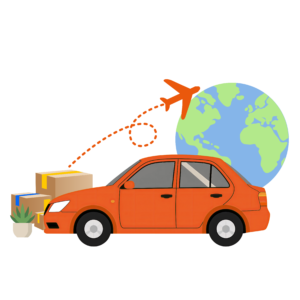
One of the best-known methods is the export scam. This typically involves a buyer from abroad, often from Great Britain, Scandinavia or Africa, expressing great interest in the vehicle. A common warning sign is that they are willing to buy the car without seeing it in person.. They explain that they are abroad on business or are buying the vehicle for a relative.
In a real case, a seller from Zurich received what appeared to be a payment confirmation from an international bank. Shortly afterwards, a shipping company was arranged to collect the vehicle. Only a few days later did it become clear that no payment had ever been received. By then, the vehicle had already been shipped.
Fake payment confirmations are another common scam. Buyers send screenshots from alleged e-banking systems or PDF confirmations that look deceptively genuine. In weekend transactions, buyers often claim that the payment will only appear in your account on Monday. In reality, the money was never transferred.
Escrow scams and cheque fraud are also common. Fraudsters suggest completing the transaction through a supposedly secure escrow service. The platform looks legitimate, but is actually fake. In cheque fraud, the buyer provides a bank cheque. The vehicle is delivered, but the check bounces days later.
The risk of test drives should also not be underestimated. There have been cases of vehicles being stolen or damaged during unaccompanied test drives. In the case of high-priced models, valuable vehicle parts have even been swapped out.
| Scam | How it works | How you protect yourself |
|---|---|---|
| Export scam | Buyer from abroad wants to buy the vehicle without seeing it | Never release or ship the vehicle before payment has been received |
| Fake payment confirmation | Screenshot or PDF payment confirmation | Only trust money that has actually arrived in your account |
| Escrow scam | Fake escrow service | Only use trusted Swiss banks and recognised payment providers |
| Cheque fraud | Cheque is rejected days late | rDo not accept cheques |
Secure Payment When Selling Your Car
The safest payment method in Switzerland remains a bank transfer received in advance. What matters is not the payment confirmation, but the actual receipt of funds in your account. Only hand over the vehicle once the funds have been fully received and cleared.
Instant payments are becoming increasingly common in Switzerland. They provide immediate payment confirmation, which is particularly useful when the vehicle is handed over on the same day.
Cash payments are also possible, but should only be made under secure conditions.Ideally, meet at a bank branch and have the cash checked and deposited together. The risk of counterfeit money or money laundering issues should not be underestimated, especially with larger sums.
Caution is advised when using international payment services, cryptocurrencies, or cheques.These payment methods are commonly used in scams and offer sellers very little protection.
For maximum security, you can choose to sell your vehicle through a professional intermediary or sales service. This ensures that payments are verified, buyers are screened, and vehicles are only handed over once funds have been received.
Handing Over the Vehicle Safely: Contract, Payment and Documents
Vehicle handover is one of the most critical stages of the sales process.Never hand over a vehicle at a motorway service station or an isolated parking lot. Safer locations include your home, a trusted garage, or ideally, a bank branch.
The buyer’s identity should be verified before the vehicle is handed over. Always check an original identity document and attach a copy or photo to the sales contract. The details in the contract must match the ID data exactly.
A properly prepared sales contract is essential. It must contain all vehicle details, the sales price, the date and time of handover and a clause such as “bought as seen”. This protects against later disputes about defects.
Important: Only hand over the keys, vehicle registration document, and vehicle once payment has been received and all paperwork has been completed.
How to Organise a Safe Test Drive
Test drives are part of the sales process, but they involve risks. No test drive should take place without first verifying the driver’s identity. The driver’s licence should be copied or photographed.
The safest option is for the seller to accompany the test drive. Alternatively, the buyer can leave a security deposit, such as an identity document or a cash deposit. The route should be defined in advance, as should the duration of the drive.
Real-life example: A seller allowed a prospective buyer to take an unaccompanied test drive. The buyer returned the vehicle, but weeks later a speeding fine from France arrived. The driver could never be identified. Cases like this show why clear procedures are essential.
If you are unsure, you can find detailed instructions on how to organize a test drive safely here.
After the Sale: Registration Document, Number Plates and Insurance
Your responsibilities do not automatically end once the vehicle has been sold. In Switzerland, several administrative steps still need to be completed.
The vehicle registration document should either be handed over directly or the vehicle should be deregistered with the road traffic office. Many sellers keep the licence plates to prevent misuse.
It is equally important to inform your insurance company. Failure to do so could leave the seller liable for certain damages or claims.
Listing and document fraud
There are also risks associated with the vehicle listing itself. Fraudsters copy vehicle listings, reuse photos and details, and create fake adverts at unrealistically low prices. Buyers pay deposits, but the vehicle does not actually exist.
Protective measures include adding watermarks to photos, limiting document sharing, and avoiding the advance disclosure of identity documents.
Warning signs of fraudulent buyers
Certain behaviors should make sellers wary. These include excessive pressure to close the deal quickly, offers to buy without viewing the vehicle, and unusual payment arrangements.
Unusual communication patterns, such as only communicating by email, poor German, or evasive answers, can also be warning signs of fraud.
A good rule of thumb is: if a deal feels too good to be true, it probably is.
Warning signs to watch for when dealing with buyers...
- Time pressure (“I’ll transfer immediately, please reserve”)
- Offers to buy without viewing the vehicle
- Communication exclusively by email
- Unusual payment arrangements
- Deal seems too good to be true
How a Professional Car-Selling Service Reduces Risk
Many of these risks can be avoided by using a professional vehicle sales service. These services handle buyer screening, payment verification, contract administration, and vehicle handover in a secure and structured way.
The seller has no direct contact with potential fraudsters, payments are monitored, and all documents are prepared in a legally compliant manner. This provides added security and peace of mind, especially when selling high-value vehicles or when dealing with uncertain buyers.
Sell privately or use a professional sales service?
| Private sale | With sales service like Autobuster |
|---|---|
| Direct contact with buyers | Buyer verification |
| Seller bears the risk | Payments verified and monitored |
| Seller organizes vehicle handover | Legally compliant documents |
| Seller organizes vehicle handover | Structured process |
The higher the vehicle’s value, the more important professional protection and support become.
The Bottom Line: How to Avoid Scams When Selling Your Car
Selling a car safely in Switzerland requires more than just a good listing. Payment processing, identity verification, contracts, and administrative requirements all need to be handled properly. Anyone who accepts unsafe payment methods or hands over a vehicle before receiving payment exposes themselves to a significant risk of fraud.
With clear procedures, a healthy level of caution, and professional support if needed, selling a vehicle can be safe, transparent, and stress-free.
Sources
Carlando: Betrug beim Autokauf vermeiden – https://carlando.ch/de/blog/betrug-beim-autokauf-vermeiden
Streetlife: Occasion-Autokauf – Das sind die neusten Betrugsmaschen – https://www.streetlife.ch/artikel/occassion-autokauf-das-sind-die-neusten-betrugsmaschen#page-content
ADAC: Betrug beim Autokauf und -verkauf: Vorsicht vor diesen Tricks – https://www.adac.de/rund-ums-fahrzeug/auto-kaufen-verkaufen/gebrauchtwagenkauf/betrug/